Self-storage pricing: why being the cheapest is costing you a fortune
Most owners underestimate the impact of pricing. A 1% price increase can lift profits by 10%. Those who structure pricing and customer experience better quickly pull ahead.
By Etienne ChampagneCo-founder of Stortech8 min readPublished on July 8, 2025
Why most self-storage owners leave thousands of dollars on the table every month
McKinsey research shows something that should change the way you look at your self-storage business: a 1% price increase typically produces a 10% lift in net profits.
Yet in self-storage, we see the opposite trend. Facility after facility wages a price war that leads to total commoditization. The result? Only the big chains win.
The fatal mistake: treating pricing as a tactic
Here's what we've discovered talking to players across the industry: most self-storage owners don't put enough thought into their pricing. They treat it as a tactic rather than a core strategy.
The result? They end up with basic, limited pricing models. And when you don't understand how to use pricing to your advantage, the obvious solution becomes copying the competition and trying to be a little cheaper.
The outcome: your service becomes a simple commodity in the eyes of customers.
The three metrics that reveal everything
There are three numbers to watch to know whether your pricing is working.
1. Your profitability
Having a good occupancy rate isn't enough. If your margins are thin despite a well-filled site, chances are your prices aren't where they should be. Good profitability means every rented unit contributes to growth instead of merely covering costs.
2. Your conversion rate
A very low conversion rate can indicate that your prices exceed perceived value. But on the flip side, an unusually high rate (90% or more) is often a sign that you're too cheap. Good pricing should appeal to the right customers, not everyone.
3. Your retention
Losing 3 to 5% of your customers every year because of a price increase isn't a failure. It's a strategy that grows revenue while shedding the most price-sensitive customers, who are often the least profitable to serve.
The three types of customers in your market
In any market, you have three customer segments:
Low-price segment: very price-sensitive customers who just want the cheapest option possible
Middle segment: the silent majority that wants decent value without paying premium
Premium segment: customers who value security, service, and convenience
The mistake most operators make? They offer the same thing to everyone, differentiated only by unit size.
The Netflix model for self-storage
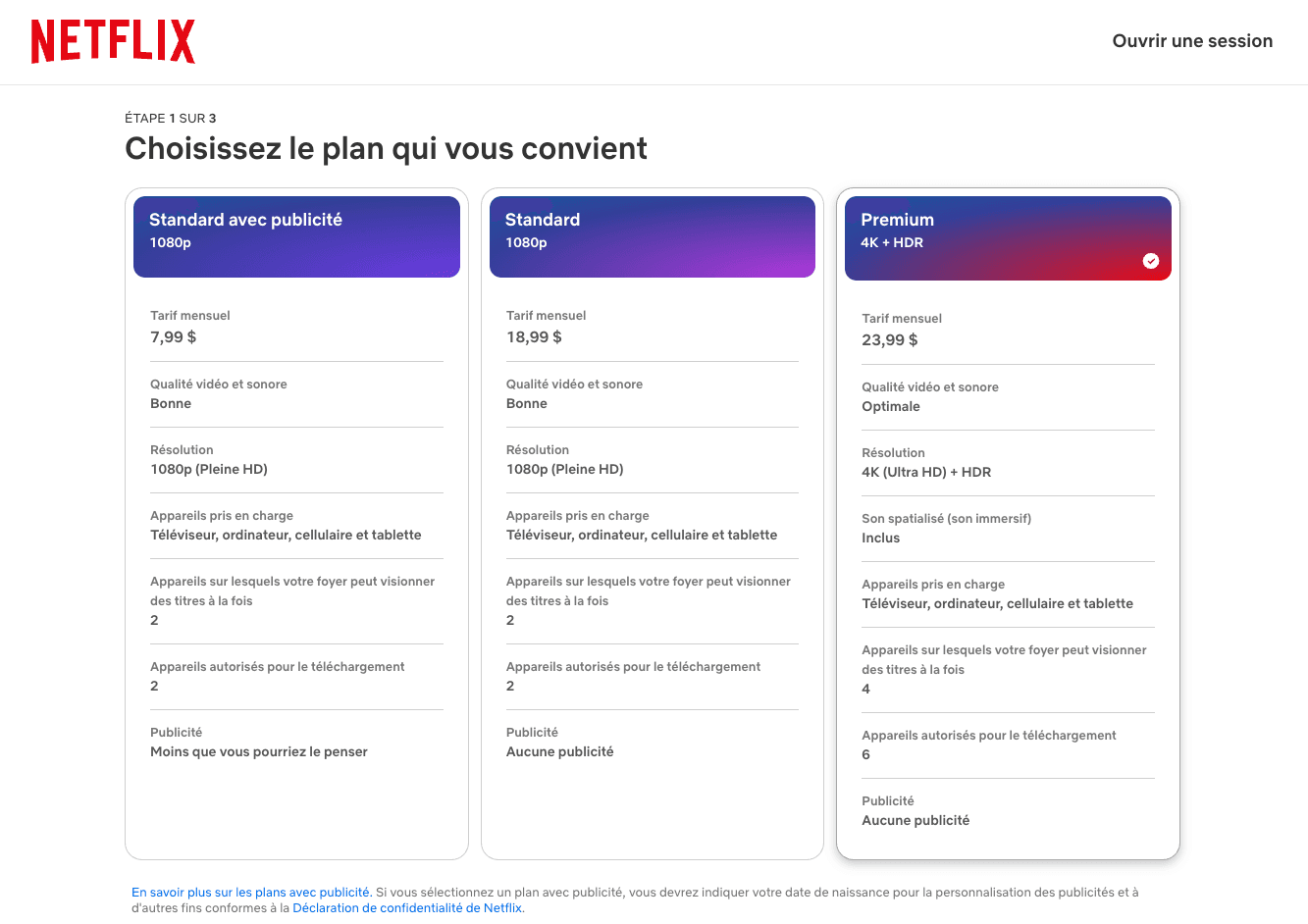
Instead, take a page from Netflix or the airlines, who have unbundled their services. Build packages:
- Basic storage: competitive price, minimal service
- Standard storage: good value, maybe a small attractive upsell like easier access
- Premium storage: turnkey, insurance included, 24/7 unit access, fast access, climate controlled, more flexible cancellation terms
This approach lets customers choose their level of experience while protecting your margins across all segments.
The annual increase system nobody runs
Here's the secret of the facilities that succeed: they have a system for price increases. Not panic increases when costs go up, but a planned process.
Here's an example of an effective cycle:
February: analysis and planning. Assess your occupancy rates, margins, and competitor prices.
March: customer communication. Clearly announce your adjustments with 30 to 60 days' notice. Explain the value you deliver, not just the increase.
May: rollout. Peak season is starting, and customers accept the new rates more easily.
And you do this every year, on the same date. Your customers get used to the idea that it's normal. Because it is normal. All your costs go up, so your prices have to follow.
How to communicate a price increase without losing everyone
One negative reason (costs have gone up) + several positive reasons (we keep delivering the best service, we're investing in new equipment, etc.).
And stop worrying about losing customers. If you aren't losing 3 to 5% of your most price-sensitive customers every year, you're leaving money on the table.
Opening a new site? Here's the mistake to avoid
Want to hit 70-80% occupancy fast? The temptation to cut prices is enormous. But beware: those "promotional" prices tend to become permanent in customers' minds AND in your local market.
The right approach: offer a reduced price for the first 3 months, but be clear from the start that the regular price kicks in afterward. Give a specific date, explain the logic, and above all: enforce it.
With Stortech you can easily set up this kind of temporary promotion with precise duration rules, fully automated. You keep control over your pricing strategy, with no manual management.
Why your price should be higher than the competition
When a customer compares your $100 per month to $90 at the competitor, they need to understand why they should pay $10 more.
Do you offer:
- 24/7 access vs. limited hours?
- Enhanced security vs. basic surveillance?
- Online booking vs. phone only?
- Contract flexibility vs. rigid terms?
Be clear on 2-3 core differences. Not a list of 10 features where 8 are the same everywhere.
The modern tech advantage
Platforms like Stortech finally give independents access to sophisticated tools:
- Full pricing control (AI-powered automatic increases coming soon)
- Automatic renewals to eliminate late payments
- Fully autonomous 24/7 booking
- Dashboards to monitor your key metrics
The mathematical reality
In an industry with high fixed costs, every additional dollar of revenue flows almost directly to profit. If you raise your prices by 1% and keep the same occupancy, your profits can climb by 10%.
But if you cut prices by 1% to try to attract more customers, your profits drop by 8-10%. With fixed costs like wages, insurance, and maintenance climbing non-stop, that can hurt the bottom line badly.
The bottom line
Stop treating your prices like a last-minute tactic. It's a core strategy that can make or break your business.
The question isn't whether you should raise your prices. It's how to do it intelligently, systematically, and by communicating the value you deliver.
Because if you don't, somebody else in your market will. And guess who'll be more profitable in the long run?


Less admin. More rented units.
Book a free 15-minute demo and see Stortech with your own numbers.
Book a demoRelated articles

Move-outs without the drive
The tenant photographs the empty unit. You approve from your phone. The unit is rentable the same day.

The six Ds: why self-storage demand never goes away
Divorce, death, dislocation, downsizing, disaster, deployment. Six life events that fill storage units no matter what the economy is doing. Here is why self-storage is one of the most resilient industries there is.